Off-the-Grid Texas Hill Country Cabin Rentals

28 min read

What ‘Off the Grid’ Actually Means at Camp Hideaway

You turn off the engine and hear nothing. No compressor drone from the cabin next door, no muffled television through a shared wall, no chime from a lobby speaker welcoming you to the property.

Private glamping tent exterior with fire pit at Camp Hideaway — off-the-grid cabin rental in the Texas Hill Country

That silence is the product, and it was built on purpose. Camp Hideaway sits in the Texas Hill Country, where the terrain itself does half the work: rolling limestone hills blanketed in cedar and live oak, with enough acreage between structures that your nearest neighbor is the landscape. This is what an off the grid cabin rental in Texas actually looks like when the property was designed around seclusion from the ground up, rather than retrofitted with a marketing phrase after the fact.

Most listings that call themselves “secluded” or “off the grid” simply mean they have a rural address. You arrive and find a cluster of cabins sharing a gravel loop, a common fire pit where strangers gather, staff golf carts rolling past your porch at odd hours, and wifi that works just well enough to keep your phone buzzing. The phrase becomes decoration. The experience stays connected.

Camp Hideaway took a different approach. The property was not scaled for volume. There is no shared lobby. No communal pool where other guests’ kids are splashing during your morning coffee. No front desk foot traffic. The structures are positioned so that sightlines between them are broken by the natural topography and tree cover. When you step onto your porch, what you see is Hill Country brush and sky. What you hear is wind through the cedars and, depending on the season, the low hum of cicadas or the absolute stillness of a winter evening.

The distance from the nearest town reinforces the feeling. You are not on the outskirts of a busy downtown strip with headlights sweeping across your window at night. You are out in it. The drive in passes through open ranchland and two lane roads where the posted speed drops because the road narrows, not because of traffic. By the time you arrive, your phone signal has already started to thin, and that is by geography, not by gimmick.

This matters because the people searching for off the grid cabin rentals in Texas have usually been burned before. They booked a place that promised solitude and delivered a vacation rental park with better photography. Camp Hideaway exists for the opposite expectation: fewer guests, more space, and a physical environment where disconnection is the default rather than something you have to manufacture by putting your phone in a drawer.

You can see how the property sits in the landscape and get a real sense of the spacing and terrain in the photo gallery. It looks the way it feels: open, quiet, and genuinely removed.

The Land: Texas Hill Country, Specific to This Property

The structure of the property only matters because of what surrounds it. Camp Hideaway sits on Hill Country terrain defined by limestone outcroppings, native cedar, and live oak canopy that filters light differently depending on the hour. This is not a manicured resort lawn with a few decorative trees. It is actual Texas Hill Country land, with the elevation changes, rocky soil, and dense brush that come with it. The landscape is the product.

Mornings on the property start with sound before anything else. Cardinals, wrens, and mockingbirds are active early, and because there is no road noise or mechanical hum competing, you hear them clearly. The air is cooler than you expect if you are used to Austin’s retained heat; the elevation and tree cover shift the temperature enough that coffee outside in the early hours feels comfortable even in warmer months. By midmorning, the light moves through the cedar in long angled shafts that make the limestone glow warm white.

Afternoons bring a different character. The canopy provides real shade, not token shade, and the terrain means you are walking slight inclines and descents as you move between spaces on the property. The ground is hard packed in places, loose rock in others. It feels like Hill Country because it is Hill Country, not a version of it engineered for foot traffic. Grasshoppers, fence lizards, and the occasional whitetail deer are part of the daily scenery. You will see them without trying.

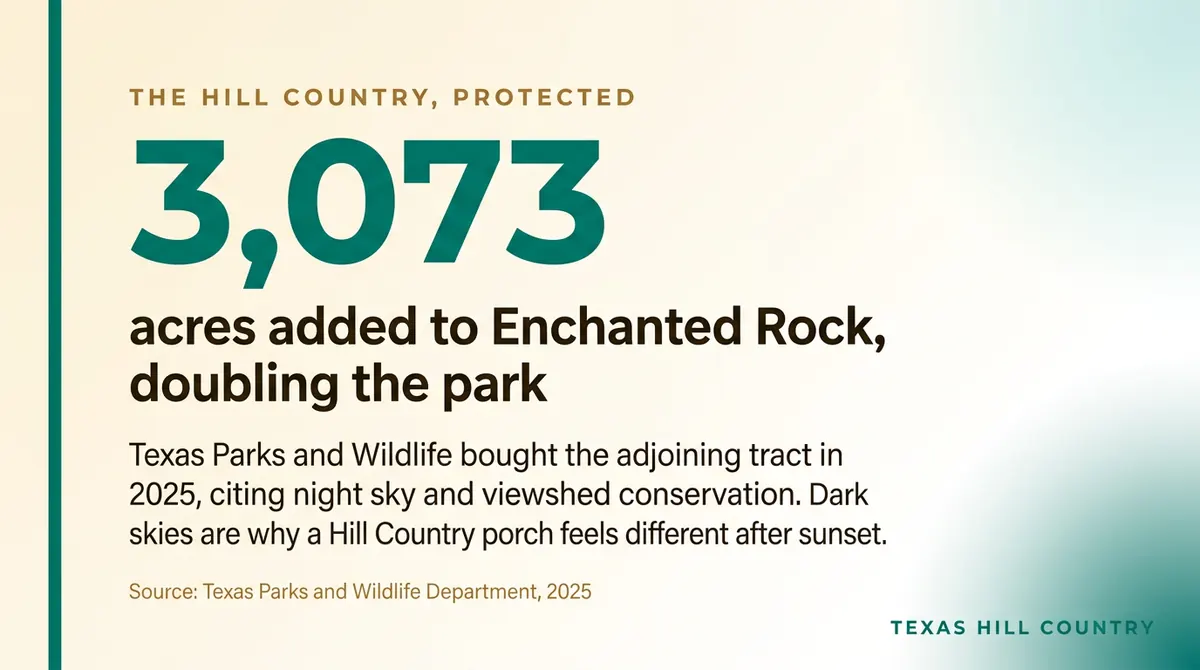
Nights are where the property separates itself most clearly from anything closer to a metro area. Without city light bleed, the sky opens up. The Milky Way is visible on clear nights, and the darkness is genuine. This is not “dim.” It is dark in the way that takes your eyes several minutes to adjust. Sounds shift too: owls, coyotes at a distance, and wind through the cedar replace the daytime bird chorus. For groups that have spent the day in sessions or working through an agenda, stepping outside after dinner and seeing that sky resets something.

The property’s location near Spicewood places it within a reasonable drive from Austin, close enough that your group does not lose half a day to travel but far enough that the arrival feels like a genuine departure. The Hill Country between Austin and the property transitions quickly from suburban development to open ranch land, and by the time you reach Camp Hideaway, the context has fully changed. That transition matters for retreats and events where you need people to mentally leave work behind.

Every detail here should be confirmed with the property directly, because the land changes with the seasons. Spring wildflowers shift the color palette. Summer greens deepen under the live oaks. Fall brings cooler mornings faster than you would expect. The property is not static, and what you experience depends on when you arrive. That is part of what makes it a real place rather than a controlled environment.

Inside the Cabin: What Roughing It Does Not Mean Here

You step onto the porch, pull open the door, and the first thing you register is that this is not a tent with walls. The cabin is a built structure with real bones, designed for people who want to sleep well after a long day outside. The distinction matters because “off the grid” carries baggage. People hear it and picture sleeping bags on plywood. That is not what is happening here.

Luxury freestanding soaking tub at Camp Hideaway — off-the-grid does not mean roughing it

The sleeping setup anchors the whole experience. You get a real bed with quality linens, the kind where you pull back the covers and feel actual weight in the fabric. Whether the cabin includes a sleeping loft or additional rooms for your group depends on the specific unit. (We recommend confirming exact configurations with our team before booking, since layouts vary.) The point is that nobody is roughing it at bedtime. You sleep the way you sleep at home, except the silence outside is deeper and the air through the window is cleaner.

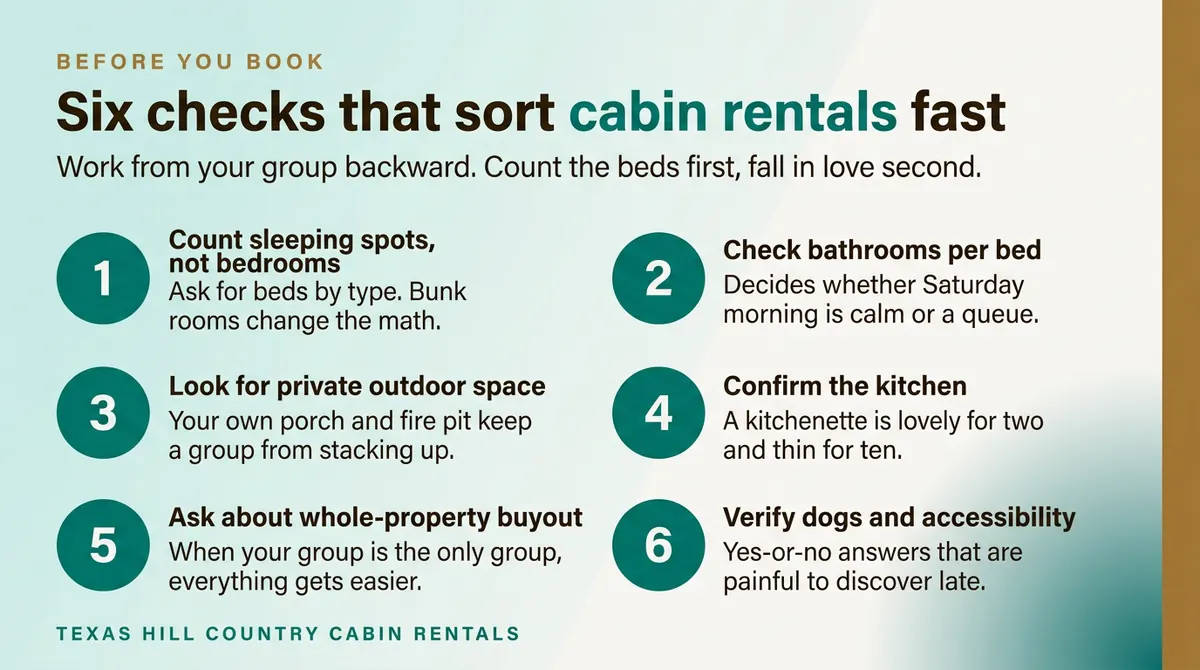
The kitchen situation answers the second most common question we hear: “Do we need to eat out for every meal?” You do not. The cabin includes a functional kitchen space equipped for real food prep. Whether that means a full stove or a well appointed kitchenette depends on the cabin, so ask us about specifics when you reach out. Either way, you can make coffee first thing in the morning without getting in a car. That alone changes the rhythm of a stay.

The bathroom is indoors, with hot water and proper plumbing. This is worth stating plainly because some guests genuinely wonder. You are not walking to a shared bathhouse with a flashlight. You shower in your own space, with water pressure that works and a door that closes. The Texas Hill Country climate can swing from triple digit summer heat to surprisingly cold winter mornings, so climate control is built in. The cabin has both air conditioning and heat, which means you are comfortable in August and comfortable in January. That is a non negotiable for a place that books year round.

Now, here is where the design philosophy becomes clear. Step back and notice what is not in the cabin. There is no television mounted on the wall. There is no WiFi router blinking in the corner. There is no alarm clock on the nightstand. These absences are not oversights or budget cuts. They are deliberate choices that shape what a stay here actually feels like. The cabin gives you everything you need to be comfortable and removes the things that keep you tethered to the patterns you came here to break. You will not miss the TV by the second evening. Most guests tell us they stopped thinking about it by the first.

Outside your door, the cabin extends into its own outdoor space. A porch with seating gives you a place to sit with that morning coffee. A fire pit nearby means your evenings have a natural gathering point once the sun drops. (If you are curious about specific outdoor amenities like hot tubs or additional features attached to individual cabins, our team can walk you through what each unit includes.) The outdoor space is not an afterthought bolted onto the side of the building. It is half the living area, designed for the kind of sitting and talking that only happens when there is no screen competing for attention.

You can see photos of the cabin interiors and outdoor spaces in our gallery, which gives you a clearer picture than any description can. The cabin is where comfort and disconnection coexist without contradiction. You are not choosing between a good night’s sleep and a genuine retreat from noise. You get both, built into the same structure, on the same piece of land you just walked through outside.

If the cabin is starting to feel like exactly what your next trip needs, a walkthrough of the property will make that feeling concrete. Schedule a tour at the Spicewood location and see the spaces, the land, and the layout for yourself before you commit.

How People Actually Spend Their Time Here

The most common question planners and first timers ask isn’t about the cabin or the land. It’s simpler than that: “What do we actually do all day?” The honest answer is that you do whatever the day calls for, and that’s the entire point. There is no itinerary posted on the wall, no activity coordinator knocking on your door at 8 a.m. The lack of programming is not a gap in the experience. It is the experience.

Here’s what that looks like in practice. A couple wakes up without an alarm, makes coffee on the porch, and spends the first hour of the morning just sitting. No checkout pressure, no brunch reservation to race toward. Later they hike one of the on-property trails and end the evening around a fire they built themselves, watching the sky go dark enough to see the Milky Way. A solo traveler brings a stack of books, a journal, and a pair of trail shoes. She reads for three hours straight for the first time in years, then drives into one of the nearby Hill Country towns for a late lunch at a local spot. A small group of friends paddles out on the water in the morning, spends the afternoon doing absolutely nothing from a set of camp chairs, and stays up late around the fire pit telling stories they haven’t thought about in a decade. None of these days were scheduled. All of them were full.

The on-property activities are real and physical but never forced. Hiking trails give you direct access to the surrounding terrain without needing to drive anywhere. Stargazing here is genuinely remarkable because the light pollution is low enough to see celestial detail that most people only encounter in photos. Fire building is part of the rhythm of every evening, not a scheduled “bonding exercise.” If water access and kayaking are available on the property, those tend to fill the warmest parts of the afternoon naturally.

For guests who want to venture beyond the property, the Hill Country delivers. The region is dense with wineries and tasting rooms, state parks with swimming holes, and small towns with real character. These day trips are easy to fold into a stay without turning the whole thing into a road trip. Most guests find they leave the property once, maybe twice, and spend the rest of their time wondering why they don’t sit outside more often at home.

This rhythm matters for groups especially. If you’re planning a team gathering or private event in Spicewood, the unstructured time between sessions is where the real conversations happen. People connect differently when there’s no agenda competing for their attention. The property gives your group room to breathe, and that breathing room is where trust and camaraderie actually build.

You don’t need a packed schedule to have a full stay. You just need a place that doesn’t get in the way of the time you already have.

Booking, Arriving, and What to Bring

You’ve decided this is the trip. Now you need to know exactly what to do before you load the truck. The Hill Country rewards prepared guests, and showing up with the right expectations makes the difference between a seamless first evening and a scramble after dark.

King bedroom at Camp Hideaway Texas Hill Country — private off-the-grid cabin accommodations

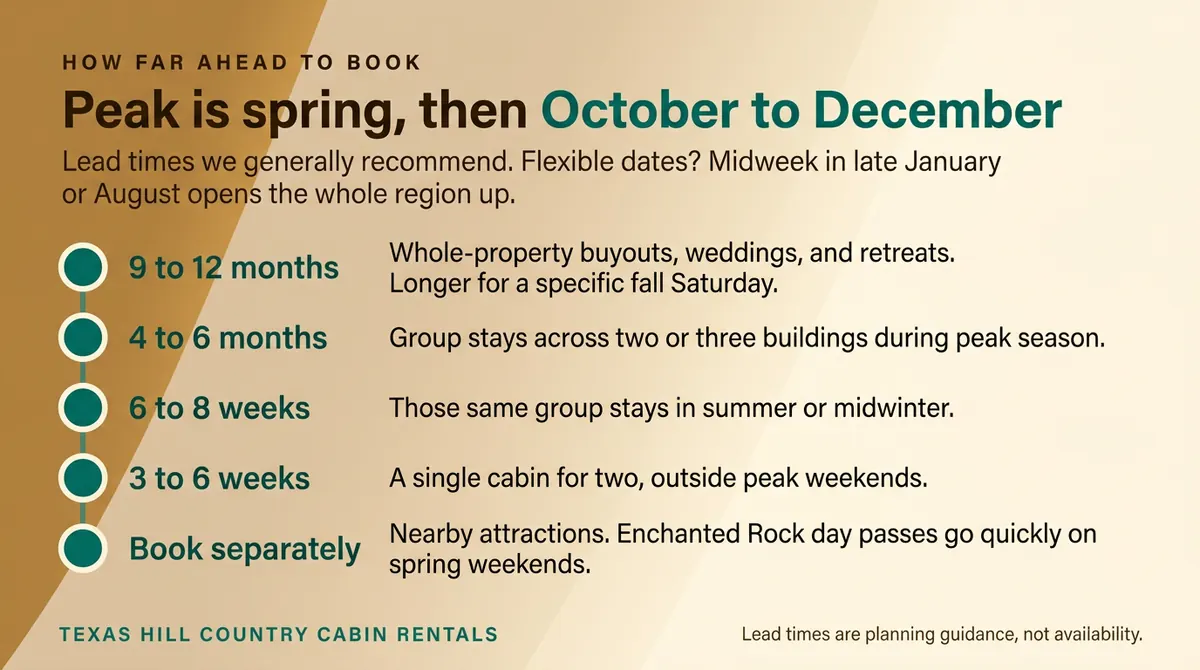
Before you book, reach out directly to confirm dates and cabin availability. If you’re planning a group retreat or corporate gathering, you can schedule a tour of the Spicewood property to see the grounds and ask your logistics questions in person. A quick conversation upfront saves a lot of guesswork.

The drive in. The Hill Country roads between Austin and the property mix paved stretches with gravel sections. Cell signal can drop well before you arrive, so download your directions before you leave town. Screen your GPS route ahead of time and don’t rely on a live connection for that last stretch. If you’re driving a low clearance vehicle, confirm current road conditions with the property team beforehand.

Stock up before you arrive. The nearest town for groceries, fuel, and any prescriptions you need is a drive from the property. Plan your supply run on the way in rather than after you’ve settled. Once you’re on site, you won’t want to leave, and the whole point is that you don’t have to. Grab ice, cooler staples, breakfast supplies, and anything specific to your group’s dietary needs. If you drink coffee in the morning, bring your own beans or grounds.

What the property provides versus what you bring. Confirm the full amenity list with the team when you book. Essentials like linens, towels, and basic kitchen equipment are typically on hand, but items like specialty cookware, toiletries beyond the basics, and personal gear are on you. Firewood availability and cooking supplies vary by season and cabin, so ask directly rather than assuming. A short confirmation call eliminates surprises.

Cell signal on the property is limited by design. That’s the appeal. But if you need to be reachable for emergencies, ask about signal pockets on the grounds or other options when you confirm your reservation.

Pets. If your dog is part of the trip, confirm the pet policy before booking. Restrictions may apply to specific cabins or areas of the property.

The best off the grid stays start with ten minutes of planning. Handle the logistics now so the only thing on your mind at check in is where to sit first.

Who Books Camp Hideaway and Why They Come Back

You have the logistics. Now the real question: is this actually for someone like you? Camp Hideaway draws a specific kind of guest, and the profiles below will either feel familiar or they won’t.

The couple who stopped pretending. They tried the resort town anniversary trip once. Shared walls, a two hour wait for a table at the one restaurant everyone recommended, and the nagging sense that the whole weekend was a performance. They come to Camp Hideaway because nobody is watching. Morning coffee happens on the porch in whatever they slept in. Dinner is something simple they made together. The celebration is the quiet itself, not the Instagram post proving it happened.

The solo guest running on empty. This is the writer staring at a blank page, the founder who hasn’t had a thought that wasn’t reactive in months, the teacher who gave every ounce of energy to a classroom and kept none. They book a cabin alone and do very little for two or three days. They walk. They sit by the water. They sleep nine hours without an alarm. The property doesn’t ask anything of them, and that absence of obligation is the entire point. Productive solitude, not loneliness.

The small group that skipped the resort. A few old friends who want to cook together, play cards on the porch, and talk without a DJ drowning them out. No scheduled mixology class. No poolside scene. They share a genuine experience instead of a manufactured itinerary, and the trip becomes something they reference for years because it was actually theirs.

What brings these guests back is remarkably consistent. They mention the stillness of the Hill Country landscape, the fact that nobody rushed them, and the feeling that the property was designed for being present rather than being entertained. Those themes surface again and again.

If any of these portraits sound like you, the next step is simple. Schedule a tour of the Spicewood property and see the space before you commit. Most guests say the moment they pulled onto the property, they already knew.

Most guests say the decision was already half made the moment they read a profile that felt like their own. If that just happened to you, book a tour at the Spicewood location and walk the property before your stay. It’s the fastest way to know for certain.

Is Camp Hideaway actually off the grid, or does it just market itself that way?

Camp Hideaway is genuinely designed around seclusion rather than just branded that way. The property sits on Hill Country terrain with enough acreage between structures that sightlines between cabins are broken by natural topography and tree cover. There is no shared lobby, no communal pool, and no front desk foot traffic. Cell signal is limited by geography, not by policy. The absence of televisions and WiFi routers in the cabins is a deliberate design choice, not a budget shortcut. That said, “off the grid” does not mean primitive. The cabins have electricity, climate control, indoor plumbing, and functioning kitchens. The seclusion is real; the roughing it is not.

Do the cabins have electricity and running water, or is this true primitive camping?

The cabins have both electricity and running water. You will find real beds with quality linens, a functional kitchen or kitchenette, an indoor bathroom with hot water and proper plumbing, and climate control covering both air conditioning and heat to handle the Texas Hill Country’s full seasonal range. Camp Hideaway is a genuine off the grid retreat in terms of seclusion and digital disconnection, not in terms of physical comfort. Guests who need primitive camping should look elsewhere; guests who want deep quiet without sacrificing a good night’s sleep will find what they are looking for here.

Is there cell service or WiFi at Camp Hideaway?

Cell signal on the property is limited, and this is a product of the property’s geography rather than an engineered block. Signal can drop before you arrive. The cabins do not have WiFi routers; that absence is intentional. If you need to remain reachable for genuine emergencies, ask the property team about any signal pockets on the grounds or other options when you confirm your reservation. For most guests, the limited connectivity is the primary draw, not an inconvenience to work around.

How far is Camp Hideaway from Austin, and what is the drive like?

The property is located near Spicewood, which places it within a reasonable drive from Austin. Close enough that your group does not lose half a day to travel, but far enough that the arrival feels like a genuine departure. The drive transitions quickly from suburban development to open ranchland and two lane roads where the terrain dictates the pace. Cell signal can thin out during the final stretch, so download directions before you leave Austin. If you are driving a low clearance vehicle, confirm current road conditions with the property team ahead of time, as the drive in includes some gravel sections.

Can I bring my dog to Camp Hideaway’s cabins?

Possibly, depending on the specific cabin and current policy. Pet restrictions may apply to certain cabins or areas of the property. Confirm the pet policy directly with the Camp Hideaway team before booking rather than assuming all units are pet friendly. Getting that confirmation in writing at the time of reservation avoids any surprises at check in.

What should I pack for an off-grid cabin stay in the Texas Hill Country?

The property typically provides linens, towels, and basic kitchen equipment, but confirm the full amenity list when you book. Beyond what the cabin supplies, plan to bring your own toiletries beyond the basics, any specialty cookware you want, and personal gear for hiking or outdoor activities. Stock groceries, coffee, ice, and cooler staples on your way in. The nearest town for a full supply run is a drive from the property. Bring a printed or downloaded copy of your directions, since cell signal thins before arrival. Dress in layers: the Hill Country temperature swings between morning cool and afternoon heat are larger than most visitors expect, and evening temperatures drop quickly after sunset.

Is Camp Hideaway suitable for a solo traveler, or is it built for groups?

Camp Hideaway works well for solo travelers. The property is not structured around group programming or social events, which makes it as comfortable for one person as for a party of friends. Solo guests typically arrive wanting real solitude: time to read, walk, sleep without an alarm, and think without interruption. The cabin gives them a private, comfortable base; the land gives them space to move through. Nothing about the property assumes you arrived with other people. That said, it also accommodates small groups and retreat gatherings well. Both uses are equally supported by the environment.

Will I share any spaces with other guests during my stay?

The property is designed so that guests do not share sightlines, common lounges, or communal pools the way a resort or vacation rental park would require. There is no shared lobby and no front desk foot traffic. Structures are positioned using natural topography and tree cover to maintain privacy between cabins. Whether there are other guests on the property during your stay depends on how many cabins are booked, but the layout ensures that your porch view and your outdoor experience remain yours. For complete private-use buyouts, ask the team about full property rental options.

Does the property have air conditioning for a Texas summer stay?

Yes. The cabins include both air conditioning and heat. Texas Hill Country summers can reach triple digits, and the property books year round, so climate control is built into every cabin as a standard feature rather than an upgrade. The elevation and live oak canopy do provide meaningful shade and cooler morning temperatures compared to Austin, but that natural effect supplements the air conditioning; it does not replace it. You will be comfortable staying in summer months.

What is there to do at Camp Hideaway if I want to leave the property for a day?

The Texas Hill Country surrounding the property is dense with options. Wineries and tasting rooms are well represented in the region and easy to build a half day around. State parks with spring-fed swimming holes are accessible within a reasonable drive. Small Hill Country towns offer local dining with real character rather than chain options. Most guests find they leave the property once or twice at most. Day trips are easy to fold in without turning the whole stay into a road trip. The majority of time ends up spent on the property, which tends to surprise first-time visitors who arrived with a full itinerary they never used.

Can a small group rent the full property for a private stay?

Full property rental for private group stays is something the Camp Hideaway team can discuss with you directly. This is particularly relevant for corporate retreats, team off-sites, and private celebrations where complete exclusivity matters. The property’s layout, with its low guest count, separated structures, and no shared resort infrastructure, makes it well suited for groups that want a genuine retreat experience rather than a hotel conference room with better scenery. Reach out to the team or schedule a tour at the Spicewood location to talk through what a full buyout would look like for your dates and your group.

What is the difference between Camp Hideaway’s Texas locations?

Camp Hideaway operates out of the Spicewood area in the Texas Hill Country. Specific differences between any individual cabin configurations, amenities, or site features are best confirmed directly with the property team, since layouts vary between units and details change seasonally. If you are trying to match a specific group size, occasion, or set of amenities to the right cabin or property configuration, a quick conversation with the team or a scheduled tour is the most efficient way to get accurate and current information rather than relying on general descriptions.

The fire has been out for an hour, the sky is doing something that should be impossible this close to a city, and your phone has been face-down on the picnic table since before dinner. That is the stay. It starts the moment you decide to stop waiting for the right time to book it.

Your dates are open. The Hill Country is the same whether you get there this month or next season, but your need for a real break is not. Schedule a tour at the Spicewood location and walk the land, see the cabin, and leave knowing exactly what you are coming back for.

Share the Post: